Our “Connecting” Initiatives
We connect science with everyday life
—and people with people.
We also connect one watershed with another.
Through these efforts, we aim to expand
the network of “connectors” who support the future of community building.

Consultation on watershed-based flood management
hearings and field insights
Advisory support from scientific perspectives
Facilitation of dialogue across jurisdictions and local governments
Citizen-participatory workshops
Spaces for members to share practices and experiences
Dialogue platforms with diverse stakeholders
Policy proposal development
Vision-building processes
Support for social implementation
Outreach classes and inquiry-based learning programs for schools
Field-based assessments and on-site interviews
We open up the future of watersheds through scientific, objective perspectives and dialogue that transcends positions.
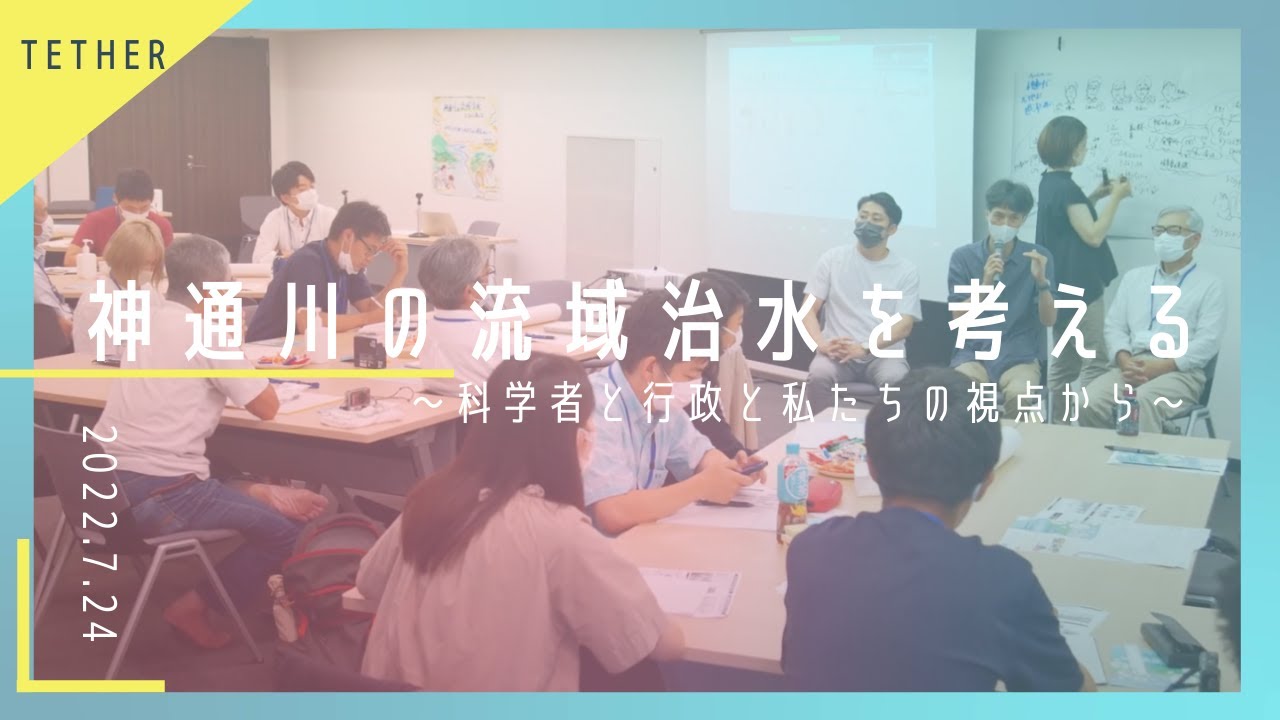
We use scientific knowledge as a “guiding framework” for thinking about the future, creating spaces where governments, researchers, and citizens can come together on equal footing to discuss the present and future of their watershed.
To those in government and local universities: would you like to co-create spaces for connection with us?
Our Approach

Building dialogue on a foundation of scientific insight and visualization
Data is not a tool to persuade someone—it is a “shared language” that enables dialogue across different perspectives. Even complex simulations are translated and shared in ways that local communities can relate to as their own future, using visualization to support open and accessible conversations.


Engaging on the ground—expanding and deepening together
Each place has its own terrain, rooted knowledge, and ways of living and governance. We step into these local contexts and work together to explore who we want to shape the future with and how. By gradually weaving relationships, we build momentum through small, practical implementations.

Sharing processes and connecting across regions
For challenges without a single answer, we bring together practices from different watersheds. We value the process of turning trial and error—both successes and failures—into shared knowledge, and further into structured, transferable insights. Rather than remaining isolated efforts, we connect these initiatives across regions, fostering a network of people who can learn from and support one another.

Case Studies
International Application of Co-Design for Watershed Management
We are expanding co-creative approaches to watershed flood management, developed through projects in Japan, into international contexts.
In March 2026, we organized an international workshop in the Mae Sai River Basin, located on the border of Thailand and Myanmar—an area increasingly affected by flooding. Bringing together 30 participants, including local residents, local and national government officials, and researchers, the workshop created a space for dialogue across different perspectives to explore shared challenges and future solutions.
Building on methodologies refined in Japan—particularly from the Oyabe River project in Toyama—we adapted our co-design framework to fit the local context. The process included pre- and post-workshop interviews, ensuring that local voices were reflected and that the dialogue could lead to future actions.
Participants highlighted the value of the workshop in clarifying concrete actions during disasters, strengthening communication between communities and governments, and expressing interest in replicating similar approaches in their own regions.
This initiative demonstrates how locally grounded knowledge and collaborative practices developed in Japan can be meaningfully applied to support resilient watershed management worldwide.


Activity Report